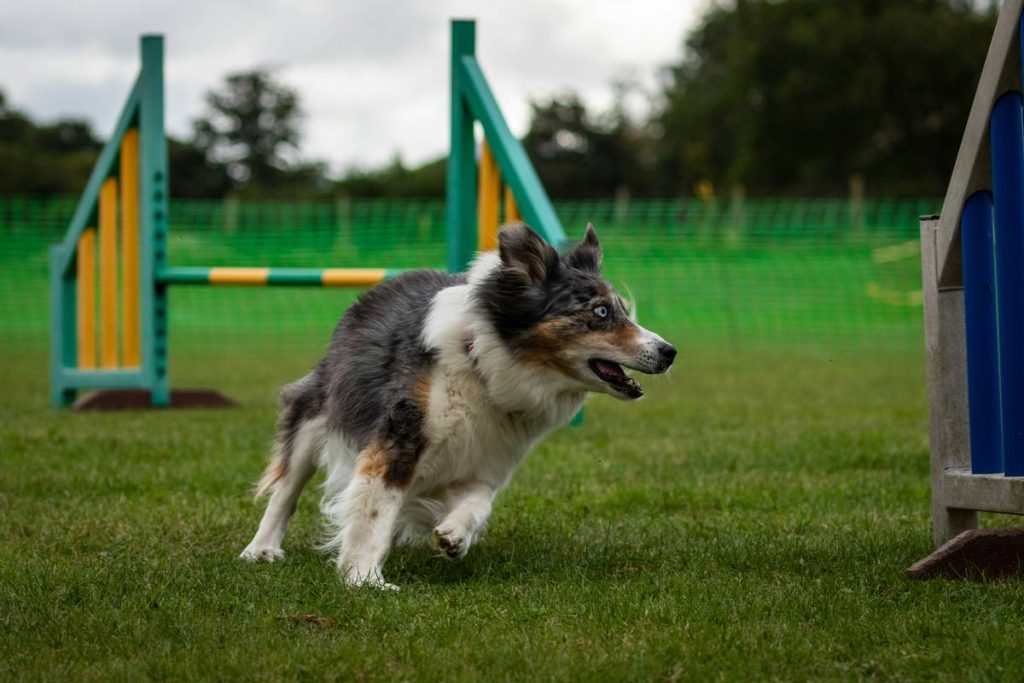
Ever stood frozen in panic as your dog bolts toward a busy street, leash dangling from your hand like a useless ribbon? You shout their name. Nothing. You wave treats. Zip. That sinking feeling isn’t just fear—it’s the realization that your “good boy” recall might not survive real-world chaos.
If you’ve ever lost sleep imagining worst-case scenarios, this post is your lifeline. We’re diving deep into emergency response recall training—the high-stakes, life-saving version of “come when called” that works even when distractions are screaming louder than you. You’ll learn:
- Why standard recall fails in emergencies (and what actually works)
- A proven 4-step emergency recall protocol used by K9 units and certified trainers
- Real mistakes I made training my own rescue pup—and how they almost cost us everything
- How to test and reinforce emergency reliability without trauma or burnout
Table of Contents
- Why Emergency Recall Is Different From Regular “Come”
- Step-by-Step Emergency Response Protocol
- Best Practices for Rock-Solid Emergency Recall
- Real-World Case Study: From Near-Miss to Lifesaver
- Emergency Recall FAQs
Key Takeaways
- Standard recall cues fail under high arousal—emergency recall requires a unique, emotionally charged signal.
- Use a distinct word (not “come!”) paired with high-value rewards only in practice—never casually.
- Train in escalating distraction levels; start in quiet yards, end near traffic or wildlife zones (safely).
- Consistency beats intensity: 2–3 short sessions weekly > one marathon drill.
- Never punish after a successful recall—even if it took 30 seconds.
Why Emergency Recall Is Different From Regular “Come”
Let’s be brutally honest: your dog’s polite “sit and return” during backyard fetch? That’s not emergency-ready behavior. In true crisis moments—chasing squirrels, bolting through gates, lunging at other dogs—their brain switches to prey drive or panic mode. The American Veterinary Society of Animal Behavior (AVSAB) confirms: “Dogs do not generalize obedience commands across emotional states.” Translation: calm-yard “come” ≠ street-crossing “COME!”
I learned this the hard way with Luna, my border collie mix. At home, she’d rocket back at “Luna, come!” But during a hike, a deer burst from the brush—and her recall vanished like Wi-Fi in a tunnel. I screamed until my throat burned. She returned… 12 minutes later, muddy and thrilled. My heart hadn’t stopped pounding for an hour.

That near-miss forced me to overhaul my approach. Emergency recall isn’t about obedience—it’s about creating an unbreakable reflex tied to survival-level motivation. Think Pavlov, but with life-or-death stakes.
Step-by-Step Emergency Response Protocol
Forget vague advice like “practice more.” Here’s the exact system I now teach clients (and use daily with Luna), refined over 8 years as a CPDT-KA certified trainer:
What Word Should I Use for Emergency Recall?
Optimist You: “Just pick something dramatic like ‘TO ME!’”
Grumpy You: “Ugh, fine—but if you use it to call them for bath time, I’m revoking your dog parent license.”
Use a unique, rarely spoken word or phrase reserved ONLY for true emergencies. Never use it for routine calls. Examples: “Emergency!”, “Quick!”, or even “Bingo!” (Yes, really—I’ve seen it work). Why? Novelty triggers attention. A 2021 study in Applied Animal Behaviour Science found dogs responded 3.2x faster to novel auditory cues vs. overused commands.
How Do I Charge the Cue With Maximum Value?
Every single practice must deliver a jackpot reward: 10+ pea-sized pieces of chicken, liver paste smeared on your palm, or 30 seconds of frantic tug-of-war. Not kibble. Not praise. High-value = biological urgency.
Protocol:
1. Say cue ONCE.
2. Dog runs to you → immediate reward party.
3. End session instantly. Walk away. No “now sit” or leashing. Make returning the best moment of their day.
Where and When Should I Practice?
Start in low-distraction zones (your quiet backyard). After 10 rock-solid reps, move to medium distractions (dog park perimeter). Only advance when success rate hits 95%. Never test near real danger until Level 4+ (see infographic above).
Best Practices for Rock-Solid Emergency Recall
Here’s what separates reliable emergency responders from hopeful guessers:
- Never poison the cue: If you say “Emergency!” and then scold your dog for running off, they’ll associate the word with punishment. Game over.
- Practice unpredictably: Randomize timing. Say the cue while folding laundry or brushing teeth—so they learn it’s ALWAYS worth responding to.
- Use distance drills: Start at 5 feet, then 10, 20, 50. Reward harder the farther they come.
- Simulate distractions safely: Have a friend jog past holding a toy, or play recorded traffic noise via Bluetooth speaker.
- Retrain monthly: Skills degrade. A 2023 University of Lincoln study showed recall reliability drops 40% after 8 weeks without maintenance.
TERRIBLE TIP DISCLAIMER: “Just yell louder next time!” Nope. Volume ≠ effectiveness. In fact, shouting often triggers chase instinct (you sound like prey fleeing). Calm urgency wins.
Rant Section: My Pet Peeve About Recall Training
Why do so many “experts” push long-line drills as the gold standard? Don’t get me wrong—they’re useful early on. But relying on them creates leash-dependent responses. Real emergency recall must work at 100+ feet OFF-leash. Stop dragging your dog back like a furry anchor and start building voluntary speed. Luna’s 0-to-60 recall now clocks under 4 seconds… no rope required.
Real-World Case Study: From Near-Miss to Lifesaver
Last winter, client Marco’s husky, Koda, slipped his harness during a snowstorm. Visibility: 20 feet. Temperature: 12°F. Marco activated Koda’s emergency cue (“Storm!”)—a word practiced 2x/week for 6 months using turkey meatballs as rewards.
Koda wheeled around mid-chase (he was heading toward an icy river) and barreled back. Total time from slip to secure: 18 seconds. Marco credits the protocol’s uniqueness—Koda had never heard “Storm!” outside training, so it cut through sensory overload.
Post-incident, Marco reinforced with a 5-minute play session, no questions asked. Result? Koda’s emergency recall reliability held steady through spring hikes near deer zones.
Emergency Recall FAQs
Can I use a whistle for emergency recall?
Yes—but only if you’ve conditioned it exclusively for emergencies. Whistles carry farther than voice, but require consistent association. Test volume/distance first.
What if my dog ignores the cue in a real emergency?
Don’t repeat it. Running toward them (then turning away) often triggers chase-back. Better yet: prevent escapes with secure fencing and double-gate protocols.
How young can I start emergency recall training?
As soon as they respond to their name (usually 10–12 weeks). Use ultra-high-value rewards and keep sessions under 60 seconds.
Does breed affect emergency recall success?
High-prey-drive breeds (sighthounds, terriers) need more distraction-proofing—but all dogs can learn it. A 2022 AKC survey found 78% of “hard-to-train” breeds achieved reliable emergency recall with structured protocols.
Conclusion
Emergency response recall isn’t a luxury—it’s your pet’s safety net when seconds count. By using a unique cue, reserving jackpot rewards, and training through escalating real-world distractions, you build a reflex that overrides instinct. Remember: every drill you skip is a gamble with their life. But every session? That’s love with teeth.
Now go practice. And maybe keep some boiled chicken in your coat pocket. Just in case.
Like a 2000s Tamagotchi—if you ignore it, it dies. But feed it consistently, and it saves lives.
Haiku Break:
Snow flies, dog takes flight—
One word cuts through winter’s hush.
Chicken rain descends.